
Let's Talk
RPA is an AI-powered automation software that helps you automate repetitive tasks using intelligent software robots so that you can focus on what’s more important.
The software robots can be designed and trained to emulate your actions interacting with digital systems and software. Just like people, they can do things like understand what’s on a screen, complete the right keystrokes, navigate systems, identify and extract data, and perform a wide range of defined actions. But software robots can do it much faster and more consistently than people, without the need to get up and stretch or take a coffee break.
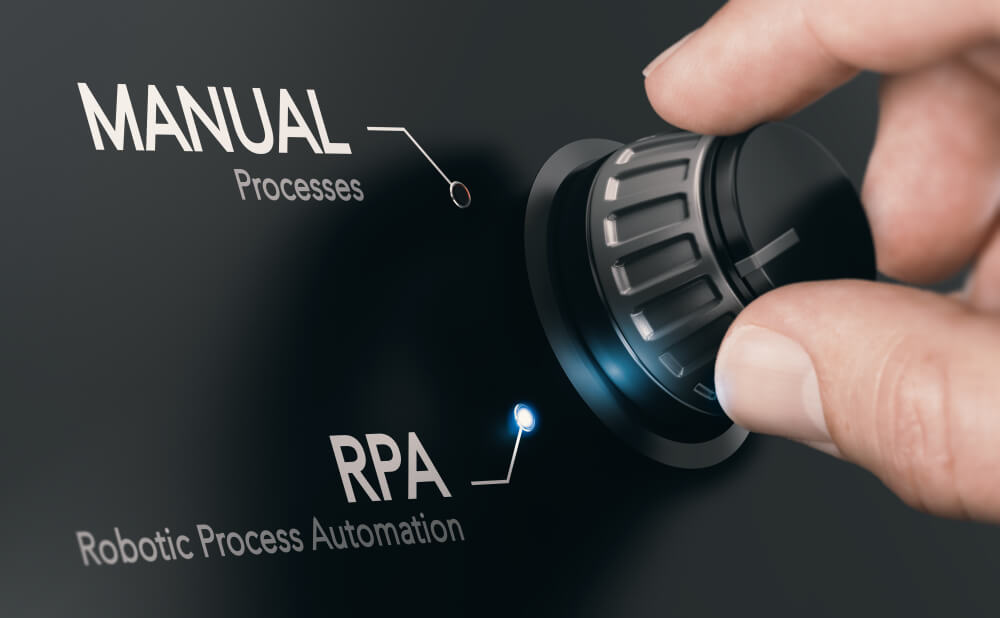


RPA is a technology that uses software robots (or bots) to automate repetitive, rule-based tasks in business processes, typically those that involve data entry, data extraction, and other manual tasks.
RPA bots mimic human actions by interacting with computer systems and applications through the user interface. They follow predefined rules and instructions to perform tasks, such as clicking buttons, copying data, and filling out forms.
RPA can improve efficiency by reducing manual errors, increase productivity by working 24/7, enhance accuracy, and free up human workers to focus on more valuable tasks. It can also lead to cost savings.
RPA is applicable to a wide range of industries, including finance, healthcare, manufacturing, customer service, human resources, and more. Any industry with repetitive tasks can benefit from RPA.
Tasks that are rule-based, repetitive, and involve structured data can be automated with RPA. Examples include data entry, invoice processing, customer onboarding, and report generation.
No, RPA is designed to complement human workers, not replace them. It takes over repetitive tasks, allowing employees to focus on more strategic and creative aspects of their work.
To implement RPA, you need skills in process analysis, automation design, programming (often in RPA-specific languages like UiPath or Automation Anywhere), and project management.
Popular RPA tools include UiPath, Automation Anywhere, Blue Prism, and Microsoft Power Automate (formerly known as Microsoft Flow).
No, RPA and AI are related but distinct technologies. RPA focuses on automating repetitive tasks, while AI involves machines learning from data to perform tasks, make decisions, and adapt to new situations.
Security is a consideration when implementing RPA, especially when bots have access to sensitive data and systems. It’s crucial to implement proper access controls, encryption, and monitoring to ensure data security.
Key performance indicators (KPIs) for RPA success include improved process efficiency, reduced error rates, cost savings, and increased employee satisfaction.
Yes, RPA can help ensure compliance by automating tasks related to data validation, auditing, and reporting, which are often required for regulatory purposes.
Challenges include selecting the right processes for automation, managing bot performance and scalability, handling exceptions and error recovery, and ensuring ongoing maintenance and updates.
Yes, RPA can benefit small businesses by automating repetitive tasks and reducing operational costs. There are RPA solutions designed for organizations of all sizes.